A day at the shore can leave beachgoers with more than a sunburn — a gulp of seawater can expose swimmers to disease-causing microbes like norovirus, salmonella, and adenovirus. Marine scientist Rachel Noble and environmental medicine researcher Samuel Dorevitch discuss the risk, and what's being done to limit swimmers' exposure.
Copyright © 2013 NPR. For personal, noncommercial use only. See Terms of Use. For other uses, prior permission required.
(SOUNDBITE OF MUSIC, THEME FROM "JAWS")
IRA FLATOW, HOST:
Just when you thought it was safe to go into the water - you remember that music, of course. It now appears it's not only the sharks you have to worry about, but tiny microbes, things like norovirus, enterovirus, adenovirus, and salmonella - just a few of the nasties that have no menacing dorsal fins or big teeth, but might be found surfing the waves along with you, and if you're unlucky, might give you stomach cramps, fever, nausea, diarrhea. It happened to one of our staff members right here on SCIENCE FRIDAY.
How serious is the risk, and how do they get into the coastal waters? And is there anything we can do to keep these microbes out of the water? Rachel Noble is a professor at the Institute of Marine Sciences at the University of North Carolina-Chapel Hill. She's based in Morehead City, North Carolina. Welcome to SCIENCE FRIDAY, Dr. Noble.
RACHEL NOBLE: Thank you, Ira. I love the music.
(SOUNDBITE OF MUSIC)
FLATOW: You must get that a lot, that music, I imagine?
NOBLE: Absolutely. Noroviruses are every bit just as dangerous.
FLATOW: Is that right? Are they that dangerous?
(LAUGHTER)
NOBLE: No, no, because - no. They might cause a little discomfort for a day or so, but I don't think that that would prolong for as long as any of the nasties that would occur after some kind of an attack. But anyway...
FLATOW: Yeah, well let's talk about what nasties besides norovirus, what things should be worried about, or should we not be worried about in the water there?
NOBLE: Well, there's a few things that people have been studying in water, water-borne pathogens. Those are things that are making people sick that are in the water, and those would be viruses, bacteria and also could be protozoa, which are just small, microscopic organisms that are not either viruses or bacteria.
You already mentioned the norovirus. Norovirus is one of the ones that people are very familiar with, because of the news. They're the ones that have been problems on cruise ships. Also with the super bugs this spring, it's just a very infectious virus. It's very contagious from person to person.
FLATOW: I want to bring on Samuel Dorevitch. He's an occupation and environmental medicine specialist at the University of Illinois in Chicago. Welcome to SCIENCE FRIDAY.
SAMUEL DOREVITCH: Thanks, Ira.
FLATOW: How many people would you say get sick from swimming at the beach? Put this in perspective for us, would you.
DOREVITCH: Well, that's a good question, and it's a question that we only have estimates for, no real solid numbers. It seems that about maybe for every 1,000 people who go to the beach, about 50, 60, 70 will get sick, and of those about 20 or 30 per thousand got sick because of their beach exposure.
FLATOW: Would they think it's from the water, or would they think, oh, I had some bad shrimp or something?
DOREVITCH: Exactly. That's one of the big issues that makes it difficult to do surveillance, to do public health work, to figure out the scale of the problem. People may not recognize it as having been linked to the water. People who are at a beach may see - many people at the beach may get sick, but they'll go to different physicians who, unbeknownst to one another, are seeing people who have a related problem.
So it's very difficult, and most of what we do know about rates of illness comes from epidemiologic studies.
FLATOW: We're going to take a break and come back and talk more with Rachel Noble and Samuel Dorevitch. Our number: 1-800-989-8255. What about the beach this summer? What should we be worried, or what should we not be too worried about, but be ready when it strikes? Stay with us. We'll be right back after this break.
(SOUNDBITE OF MUSIC)
FLATOW: I'm Ira Flatow, this is SCIENCE FRIDAY, from NPR. I'm Ira Flatow. We're talking this hour about the viruses and bacteria that end up in our coastal waters, and talking with Rachel Noble and Samuel Dorevitch. Dr. Noble, where do these things come from? How do they get into the ocean?
NOBLE: Well, in the United States, I would say that the main source is really storm water. And that's the water that's coming from rainfall that's really washing over the land and taking everything with it to the lowest point, which is often a river, a creek or the oceans. Our sewage systems in the United States are quite good, and some of the best in the world in terms of their treatment of things that could make you sick.
So while there are sewage spills every once in a while and cracks in sewage lines, storm water is really one of the biggest sources. So any time you see a pipe that's coming to the beach with water flowing out of it, and in many cases, those are storm water pipes. And if it's flowing after a big rain fall event, likely that it could be containing some material that might be contaminated from washing over the land.
FLATOW: But, you know, that's where you see the kids always playing that water at the beach.
NOBLE: Absolutely. That's one of our largest concerns. So those pipes - remember, even if there's water flowing in that's not from a pipe and that's pooled and coming into the ocean, if it's flowing, you know, from a landward source towards the ocean, it can contain any kinds of material from feces that can come from birds and dogs and people. And those are the things that are going to contain the pathogens that will make people sick.
FLATOW: The National Resource Defense Council, the NRDC, just released their testing the waters report on 20,000 beach closings around the nation last year due, in part, to bacterial contamination. And they wrote, quote, "serious water pollution persists at our nation's beaches." Would you disagree with that?
NOBLE: No, I wouldn't disagree with it. It depends on how much monitoring the state actually does in order to kind of pick up when the beach might be closed. But yes, there are serious problems with some of the - a lot of the storm water that comes to our beaches remains untreated. It's doesn't go through any kind of treatment plant. It's just raw material that's flowing across the land to the ocean. So that can definitely be the case.
FLATOW: Actually, they have a really interesting map. We have a link on our website to a map where you can look up your own beach and see where the water quality, what water quality they have rated. It's sciencefriday.com/beaches. Dr. Dorevitch, these pathogens, I understand, can also be found in the sand at the beach.
DOREVITCH: That's right.
FLATOW: So if you're making a sandcastle, you're playing with the pathogens.
DOREVITCH: That is correct. There's been research in the last few years showing that various viruses and bacteria persist and replicate in sand, and that epidemiologic studies have shown that people who have been digging in sand or have been buried in the sand are at greater risk for getting sick after their beach visit.
FLATOW: We're not telling everybody not to go to the beach, are we?
DOREVITCH: We're definitely not telling people that. We're telling people that they should pay attention to information that's available online about beach quality before they get to the beach. A lot of cities and municipalities post water quality online. Once they get to the beach, they should check if there's a yellow flag or red flag up.
They should wash their hands before they eat after being at the beach. So people definitely should be encouraged to put on their sun block and get out to the beach, but pay attention to the information about risk.
FLATOW: Dr. Noble, what can you do to minimize? Let's say you're in the water and you want to splash around. What can you do while you're in the water to minimize taking in these meanies?
NOBLE: Well, I'm a big swimmer, so it's hard for me to say. But one of the things that people can do is try not to overly ingest huge amounts of water. Of course, whenever you're swimming, the benefit of, you know, the health of just being out in the water and enjoying yourself is going to also somewhat outweigh the risk, especially if the water quality is good.
But head emersion and getting - basically allowing those pathogens to get into either your nose or your mouth are the ways, primarily, that these organisms do make you sick. You have to ingest them in order to make yourself sick with most of them. So the bottom line is trying to not ingest huge amounts of water, and that's probably one of the biggest pieces of guidance.
But one of the pieces of guidance that I give people additionally is just not allowing their families and children to play close to storm drain pipes and in areas where there's pooled water from the land coming into the ocean, because that's often the location of some of the highest risk. And like Sam said, if there are signs, you know, be wary of the signs and be mindful, because many of the signs that are placed near storm drains have been placed and placed around the storm drains to warn people.
And there's been good science conducted behind the signs that allow us to determine how far from storm drains, for example, it might be safe then to swim. There's more yet to done, but I think that a lot of those warning signs are placed, you know, are really placed properly. And so looking out for storm drains is really another piece of advice that I can give.
FLATOW: How long does it take - if you test the water, how long does it take to know that the beach is contaminated?
NOBLE: That's a great question. Right now, the majority of managers, states across the country, they use a test where if you take the sample on a Monday morning, you don't actually get the result until a Tuesday morning. There have been new guidance, basically, released by the EPA just in the last six to nine months that allow the use of some new DNA-based methods, methods that we've actually been, you know, developers of in my laboratory.
And we've been working on these rapid methods for a long time. And so now we can get results in about three hours. And there are states across the country, including California and Virginia, and a range of other states, including some inland locations in Wisconsin, Ohio and in Illinois that have been using these rapid methods to allow us to put signs up now within a few hours, rather than waiting a day past the time whenever the person was in the water.
So now, really, if we take a water sample in the morning, we can get a sign up or notification to the public hopefully before they put their towel down on the beach at roughly noon, or slightly before that, which is a huge advancement. We'd like it to be five minutes, but it's a huge advancement from where we were just a few years ago.
So we hope that the rapid methods will actually improve our ability to warn and notify the public of an event of contamination much more accurately coming into the future.
FLATOW: Let me go to the phones now. Let's go to Gulf Shores, Alabama. Hi Mary. Welcome to SCIENCE FRIDAY.
MARY: Hi, how are you? And thanks for your program.
FLATOW: You're welcome.
MARY: I have a question. It is related to bacteria count, and our beaches, in Gulf Shores, have very good ratings because they test often and apparently have done very well. But what I have been concerned about is the use of dispersants that was allowed by the EPA, and of course that meant the oil was dispersed, and there is probably still dispersant in the water. And, of course, the dispersant, as far as I have heard, disables the microbe eating - the oil-eating microbes from doing their job.
And I've also heard that use of dispersant increased the toxicity of tar balls, or bacteria count. I don't know which. But, anyway, I'd like your comments on how can we test for dispersants, because I'm very comfortable with the bacteria counts, but I'm very concerned. Are we testing for dispersants? And I think we should be, but because of the ingredients.
FLATOW: Sam Dorevitch?
DOREVITCH: Well, I think the caller raises an important issue, that when the water is tested routinely at beaches, it's for a very limited number of analyses. In Great Lakes waters, it's for the e-coli bacteria, and for marine waters it's the Enterococci bacteria. But chemicals are rarely tested, so the idea that more testing for chemicals is right on target, particularly after there's been a known use, heavy use of a chemical in a beach.
But the studies, human health studies are lacking at this point in terms of the particular dispersants that were used in the Gulf oil spill in terms of what do they do to people at beaches.
FLATOW: Thanks for the call, Mary.
MARY: Thank you.
FLATOW: 1-800-989-8255 is our number. Let's go to Nick in Riverside, California. Hi, Nick.
NICK: Hello. Thank you for your show today. The reason for my phone call is it's partially to do with public beaches, but more so, in the State of California this summer, there was a new mandate for signs that were posted on all public swimming areas, including swimming pools. And the signs have to say something along the lines of no swimming allowed by occupants suffering from diarrhea within two weeks.
And this is including, like, public beaches, or also, you know, chlorinated pools. And I'm just curious if this is sort of a very big concern for these pathogens. Is this something new, that as far as for like someone who had, you know, a bad flu two weeks ago, that chlorine can't even kill it?
FLATOW: Dr. Noble, Dr. Dorevitch?
NOBLE: It's not.
DOREVITCH: No. That's...
NOBLE: It's not necessarily new. Sam, I'll let you answer this question. I think one of the biggest things is that for the viral pathogens, you can actually shed them for very long periods of time. So if you have gotten an infection, there's, you know, many studies that demonstrate, you know, people being able to shed them through fecal contamination for 12, 14, 16 weeks, and even longer.
And some of these organisms are extremely hardy in water, even chlorinated water, to be honest. Hepatitis A is a good example. Adenovirus is also another hardy virus. So only in certain circumstances will they actually be degraded so that they wouldn't infect another person.
DOREVITCH: And just to add to that, there are more recorded outbreaks of waterborne disease in chlorinated waters than in surface waters. And that sounds a little paradoxical, but it's because we know more about what happens to people after they've been in a swimming pool.
And the parasites giardia and cryptosporidium, especially cryptosporidium, are very difficult to get rid of with chlorine. So public health authorities have been mounting an education campaign to get people to stay out of the water and prevent them from transmitting, potentially, their cryptosporidium to other people who are in the same swimming pool. So I think they're on the right track by encouraging that in California.
FLATOW: So if you were to choose between the pool and the shore...
(LAUGHTER)
FLATOW: I know what I would choose.
(LAUGHTER)
NOBLE: If it's not raining...
FLATOW: If it's not raining - well, let's...
NOBLE: ...the beach is a great option.
FLATOW: Well, let's talk about rain. Should there be a rule of thumb of how long to wait to go to the beach after a big rain?
NOBLE: There are actually are. In many states, they use one of two approaches. One is that they can say that after a certain amount of rainfall, that it's recommended that - that swimming is not recommended, specifically in places that are prone to a lot of storm drain discharge. So in the state of California, in various places, they have, after a half-an-inch of rain, a warning or a recommendation to the public for a 72-hour kind of watch on water quality in certain areas, once again, that are prone to these freshwater outlets or storm drains.
Other places will use a presumptive rainfall closure, actually, where they say after - rather than a recommendation, where they actually say that a water body is closed after, say, an inch, or an inch and a half of rain will be a more common number for the Atlantic Coast. Once that rainfall amount has been surpassed, they say this beach is closed for 24 hours or so.
FLATOW: Well, I was headed to the beach this weekend. I have to - no, I'm going go out to the beach. I love the beach. Thank you. Thank you both for some very interesting information for us.
DOREVITCH: Thank you.
FLATOW: Have a - and have a great weekend. Rachel Noble, professor at the Institute of Marine Sciences, University of North Carolina-Chapel Hill and Samuel Dorevitch, occupational and environmental medicine specialist, University of Illinois in Chicago. Thanks again for joining us today.
NOBLE: Thank you, Ira. Thanks for the opportunity.
FLATOW: You're welcome. I'm Ira Flatow. This is SCIENCE FRIDAY, from NPR.
Copyright © 2013 NPR. All rights reserved. No quotes from the materials contained herein may be used in any media without attribution to NPR. This transcript is provided for personal, noncommercial use only, pursuant to our Terms of Use. Any other use requires NPR's prior permission. Visit our permissions page for further information.NPR transcripts are created on a rush deadline by a contractor for NPR, and accuracy and availability may vary. This text may not be in its final form and may be updated or revised in the future. Please be aware that the authoritative record of NPR's programming is the audio.
View the original article here
 If you breathe in helium and talk it will make your voice sound funny. When you're finished squeaking, the helium you breathe out will most likely find its way out into space. Finding helium on Earth is rare, but it is one of the more common elements in the universe.
 When you put together a home chemistry kit for yourself, don't forget to toss some coffee filters into the cabinet. Coffee filters are great for keeping dust and insects out of crystal growing projects while permitting evaporation, are just right for paper chromatography, and make excellent filters. Here are some projects that use coffee filters for home chemistry. if(zs>0){if(zSbL250)gEI("spacer").style.height=Math.floor(e[0].height/12)+17.5+'em';else{var zIClns=[];function walkup(e){if(e.className!='entry'){if(e.nodeName=='A'||e.style.styleFloat=='right'||e.style.cssFloat=='right'||e.align=='right'||e.align=='left'||e.className=='alignright'||e.className=='alignleft')zIClns.push(e);walkup(e.parentNode)}}walkup(e[0]);if(zIClns.length){node=zIClns[zIClns.length-1];var clone=node.cloneNode(true);node.parentNode.removeChild(node);getElementsByClassName("entry",gEI("articlebody"))[0].insertBefore(clone,gEI("spacer"))}}}};zSB(2);zSbL=0
 Are you naturally curious about the world around you? If so, I bet you have lots of questions. Here are some common chemistry-related questions, complete with answers: Do you think you have all the answers? Try the 20 Questions Chemistry Quiz!if(zs>0){if(zSbL250)gEI("spacer").style.height=Math.floor(e[0].height/12)+17.5+'em';else{var zIClns=[];function walkup(e){if(e.className!='entry'){if(e.nodeName=='A'||e.style.styleFloat=='right'||e.style.cssFloat=='right'||e.align=='right'||e.align=='left'||e.className=='alignright'||e.className=='alignleft')zIClns.push(e);walkup(e.parentNode)}}walkup(e[0]);if(zIClns.length){node=zIClns[zIClns.length-1];var clone=node.cloneNode(true);node.parentNode.removeChild(node);getElementsByClassName("entry",gEI("articlebody"))[0].insertBefore(clone,gEI("spacer"))}}}};zSB(2);zSbL=0
 A year ago today, NASA's Curiosity rover landed on Mars. The famous robotic chemist achieved the following over the past year: Traveled over a mile across the surface of Mars. Located and analyzed dry stream beds, offering evidence of flowing water on ancient Mars. Measured Martian radiation, which poses a health risk to human explorers. Found elements and chemical compounds essential for life. Became the first machine to drill into another planet. Congratulations on a fantastic first year, Curiosity! You're an amazing chemist! Next up for Curiosity is a 4-month-long trek to Mount Sharp, where she will examine the layered rocks that chronicle Martian geology. Overview of Instruments on Mars Curiosity
 Chemists use Avogadro's number in many calculations. This constant is the number of particles in a mole of a substance. It's an experimentally derived value that you can determine for yourself. One easy method uses electrochemistry to make the calculation. Current (electron flow) over time is measured in an electrochemical cell. The number of atoms in a weighed sample is related to the current to calculate Avogadro's number.
  Have you ever touched mercury? I'll admit that, back in the day, my science classmates and I used to push it around with pencils and fingers. We didn't think anything of it and we didn't seem to suffer any ill effects. Yet, touching mercury or breathing vapors that accompany the metal does leave lasting effects and can cause serious and lasting organ impairment, plus it can harm an unborn fetus. I've put together a quick summary of what can happen if you touch mercury and what you should do. You are welcome to add your own experiences with mercury, too.
  Famous for its spectacular mountain scenery, Austria is no longer the dominant political force it was in Central Europe under the Habsburg dynasty which ruled until the first world war.
  Austria's city of Salzburg is a centre for classical music
  Integration Minister Cecile Kyenge -- pictured in June -- is Italy's first black government minister.Cecile Kyenge has been the target of death threats and racist antics She became Italy's first black government minister in April Newspaper editor says the bad economy has contributed to racial tensions
 Jayda Neor and Kephra Shaw Meredith, seventh-graders from KIPP Bridge middle school in Oakland, Calif., perform a rap song about the discovery of DNA's structure in front of a green screen.Tom McFadden
  Girls are more likely to take high school physics if they see women in their communities working in science, technology, engineering and math, a new study finds.Dominik Pabis/iStockphoto.com
  As a young RAF pilot, David Raikes wrote movingly about his World War II comrades who didn't come back. Then shortly before the end of the war, he and his crewmen failed to return themselves after their plane was shot down. On the day the airmen are finally laid to rest, Alan Johnston looks at the poignancy of a poem he left behind.
 A Boston bomber of the kind flown on the fateful mission to the Po valley

 A poetry prize honouring Raikes is awarded at his old school, Radley College
 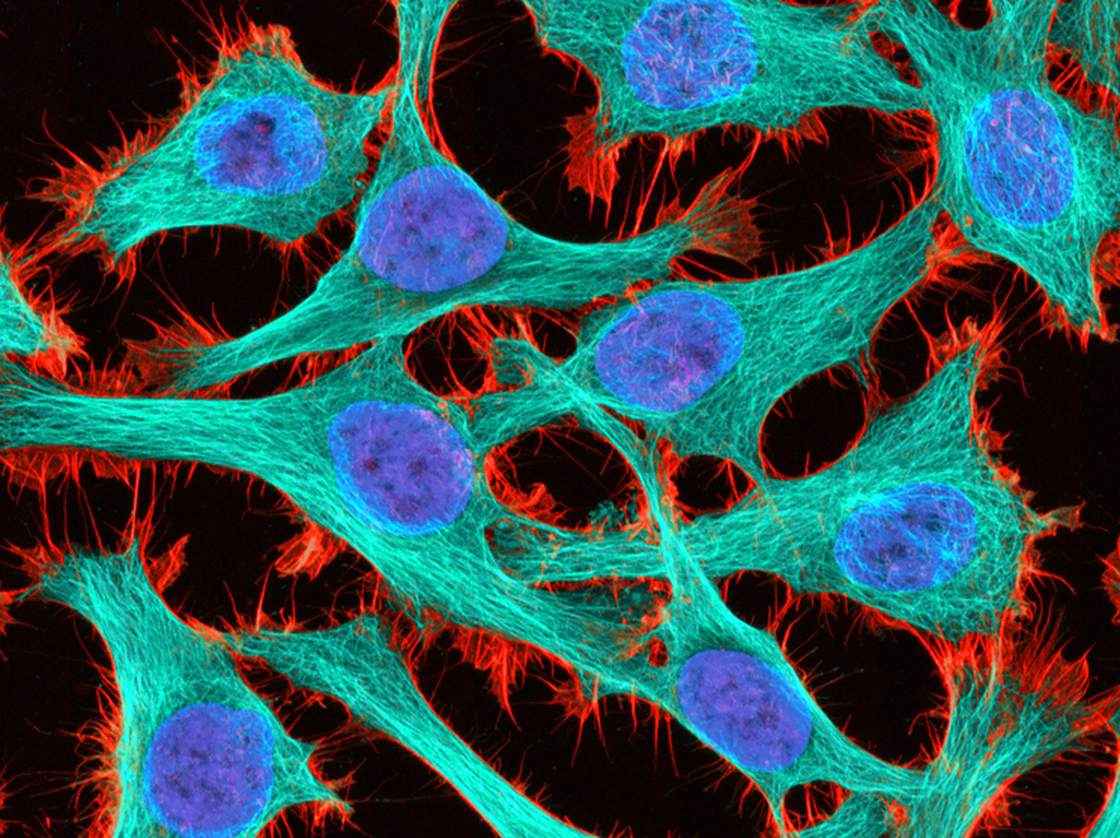 HeLa cells have been mentioned in more than 70,000 published scientific papers.Tom Deerinck/NCMIR
  Catherine has been closely watched throughout her pregnancy -- her new baby will be subject to similar scrutiny.All eyes have been on Duchess of Cambridge ahead of the birth of her first babyBritain's royal family is closely watched by the media and the publicSimon Hooper: New royal should be "first to embrace the cause of republicanism"Editor's note: Simon Hooper has worked as a journalist covering international news, politics and sports for websites and publications, including CNN, Al Jazeera, the New Statesman and Sports Illustrated.
 At least the newborn prince and his parents are unlikely to be run out of the country, even if the flag-waving royalists celebrating the birth are hardly representative of a silent majority largely apathetic about the monarchy and more inclined to treat its modern incarnation as a publicly-subsidized soap opera largely staged for the amusement of American tourists.'Wicked' author: Royal baby stands for hopeNor did his mother suffer the indignity of having the home secretary in the vicinity of the delivery room, a custom for royal births only formally ended in 1948.And there have undoubtedly been worse times in history to be born into one of Europe's great royal dynasties. Paris in 1789 springs to mind, or St. Petersburg in 1917.var currExpandable="expand18";if(typeof CNN.expandableMap==='object'){CNN.expandableMap.push(currExpandable);}var mObj={};mObj.type='video';mObj.contentId='';mObj.source='bestoftv/2013/07/23/ac-life-for-the-royal-baby.cnn';mObj.videoSource='CNN';mObj.videoSourceUrl='http://ac360.blogs.cnn.com';mObj.lgImage="http://i2.cdn.turner.com/cnn/dam/assets/130722220451-ac-life-for-the-royal-baby-00000000-story-body.jpg";mObj.lgImageX=300;mObj.lgImageY=169;mObj.origImageX="214";mObj.origImageY="120";mObj.contentType='video';CNN.expElements.expand18Store=mObj;var currExpandable="expand28";if(typeof CNN.expandableMap==='object'){CNN.expandableMap.push(currExpandable);}var mObj={};mObj.type='video';mObj.contentId='';mObj.source='bestoftv/2013/07/23/ac-britains-baby-bash.cnn';mObj.videoSource='CNN';mObj.videoSourceUrl='http://ac360.blogs.cnn.com';mObj.lgImage="http://i2.cdn.turner.com/cnn/dam/assets/130722220107-ac-britains-baby-bash-00022407-story-body.jpg";mObj.lgImageX=300;mObj.lgImageY=169;mObj.origImageX="214";mObj.origImageY="120";mObj.contentType='video';CNN.expElements.expand28Store=mObj;var currExpandable="expand38";if(typeof CNN.expandableMap==='object'){CNN.expandableMap.push(currExpandable);}var mObj={};mObj.type='video';mObj.contentId='';mObj.source='business/2013/07/09/soares-royal-baby-business-boom.cnn';mObj.videoSource='CNN';mObj.videoSourceUrl='';mObj.lgImage="http://i2.cdn.turner.com/cnn/dam/assets/130709044232-soares-royal-baby-business-boom-00010617-story-body.jpg";mObj.lgImageX=300;mObj.lgImageY=169;mObj.origImageX="214";mObj.origImageY="120";mObj.contentType='video';CNN.expElements.expand38Store=mObj;var currExpandable="expand48";if(typeof CNN.expandableMap==='object'){CNN.expandableMap.push(currExpandable);}var mObj={};mObj.type='video';mObj.contentId='';mObj.source='world/2013/07/11/pkg-santos-uk-royal-nursery.cnn';mObj.videoSource='CNN';mObj.videoSourceUrl='';mObj.lgImage="http://i2.cdn.turner.com/cnn/dam/assets/130711024316-pkg-santos-uk-royal-nursery-00014712-story-body.jpg";mObj.lgImageX=300;mObj.lgImageY=169;mObj.origImageX="214";mObj.origImageY="120";mObj.contentType='video';CNN.expElements.expand48Store=mObj;Yet the life prospects of a boy now third in line to the British crown who, if as lucky in longevity as his paternal great-grandparents, might reasonably expect to see in the 22nd century on the throne, are hardly something to be envied.The Windsors may have recovered some of their respectability after the nadir in their fortunes in the 1990s that culminated in the 1997 death of Princess Diana, thanks in no small part to the fairy-tale mega-wedding of William and Kate in 2011 and Oscar-winning propaganda such as "The Queen" and "The King's Speech."To question the role of the monarchy and Britons' attachment to it is still to risk a public flogging from more reactionary sections of the British media, as author Hilary Mantel discovered when she found herself pilloried earlier this year for describing the Duchess of Cambridge as a "plastic princess designed to breed."The resulting furore missed the point that Mantel was trying to make, which was that members of the royal family, however privileged and luxurious their lives, are essentially prisoners of their own circumstances, trapped by their supposed obligations to an archaic and largely redundant institution."Our current royal family doesn't have the difficulties in breeding that pandas do, but pandas and royal persons alike are expensive to conserve and ill-adapted to any modern environment. But aren't they interesting? Aren't they nice to look at?" said Mantel.Opinion: Baby helps make a monarchy betterIf Mantel's point was essentially true of Kate Middleton, who, like a mafia wife, married into the firm of her own volition, how much worse must the situation be for her offspring, who will become public property from the moment he is displayed to the assembled world media on the hospital steps.var currExpandable="expand115";if(typeof CNN.expandableMap==='object'){CNN.expandableMap.push(currExpandable);}var mObj={};mObj.type='video';mObj.contentId='';mObj.source='world/2013/07/08/lok-foster-uk-royal-baby-betting-odds.cnn';mObj.videoSource='CNN';mObj.videoSourceUrl='';mObj.lgImage="http://i2.cdn.turner.com/cnn/dam/assets/130704205622-william-and-catherine-baby-bump-story-body.jpg";mObj.lgImageX=300;mObj.lgImageY=169;mObj.origImageX="214";mObj.origImageY="120";mObj.contentType='video';CNN.expElements.expand115Store=mObj;var currExpandable="expand215";if(typeof CNN.expandableMap==='object'){CNN.expandableMap.push(currExpandable);}var mObj={};mObj.type='video';mObj.contentId='';mObj.source='international/2013/06/11/uk-open-mic-royal-baby.cnn';mObj.videoSource='CNN';mObj.videoSourceUrl='http://www.cnn.com/';mObj.lgImage="http://i2.cdn.turner.com/cnn/dam/assets/130611110329-uk-open-mic-royal-baby-00000910-story-body.jpg";mObj.lgImageX=300;mObj.lgImageY=169;mObj.origImageX="214";mObj.origImageY="120";mObj.contentType='video';CNN.expElements.expand215Store=mObj;var currExpandable="expand315";if(typeof CNN.expandableMap==='object'){CNN.expandableMap.push(currExpandable);}var mObj={};mObj.type='video';mObj.contentId='';mObj.source='bestoftv/2013/07/04/exp-foster-royal-baby-birth.cnn';mObj.videoSource='CNN';mObj.videoSourceUrl='';mObj.lgImage="http://i2.cdn.turner.com/cnn/dam/assets/130704112353-exp-foster-royal-baby-birth-00002506-story-body.jpg";mObj.lgImageX=300;mObj.lgImageY=169;mObj.origImageX="214";mObj.origImageY="120";mObj.contentType='video';CNN.expElements.expand315Store=mObj;The mainstream media may feign responsibility, keeping a respectful distance as the young family find their feet and honoring royal requests to leave the child alone, but he will still face near constant public intrusion, living a life framed by the ubiquitous lens of the camera phone.And in an age obsessed with the oxymoronic phenomena of "reality" and celebrity, the young royal will be forced to perform a gilded simulation of a normality that he will never experience for real, ultimately embracing the stiflingly conservatism of a British establishment of which the monarchy remains the apex, and allowing their personality to be airbrushed according to public tastes. It will be "The Truman Show" with footmen.Royals, for better or worse, once inhabited worlds of intrigue, conspiracy and high drama, their lives, relationships and deaths entwined with the rise and fall of nations and empires. The feats and misdeeds of kings, queens and their progeny were fodder for Shakespearean epics.Yet it is centuries since the British royal family played anything more than a decorative role in the life of the nation -- and this new heir may have to wait the best part of this century before assuming even those diminished duties.Opinion: How to raise a royal babyRoyal heirs have traditionally passed the years waiting for their relatives to die by becoming champions of worthy causes. Prince Charles is famed for his woolly opinions on environmentalism and architecture, while Prince William has leant his support to the campaign to tackle homelessness.Perhaps, out of enlightened self-interest alone and with time on his side, the prince could one day become the first royal to embrace the cause of republicanism.The opinions expressed in this commentary are solely those of Simon Hooper./* push in config for this share instance */cnn_shareconfig.push({"id" : "cnn_sharebar2","url" : "http://www.cnn.com/2013/07/23/opinion/opinion-pity-the-new-royal-arrival/index.html","title" : "Why I wouldn\'t want to be royal baby"});
 July 23, 2013 -- Updated 2047 GMT (0447 HKT)
  Catherine, Duchess of Cambridge and Prince William introduced their son to the world as they left the hospital. July 23, 2013 -- Updated 1627 GMT (0027 HKT)
  It's a boy! Catherine, Duchess of Cambridge, and husband Prince William welcomed their first child - baby son.July 17, 2013 -- Updated 2022 GMT (0422 HKT)
  Think you know all you could ever want to about royal babies amid all the excitement about the new arrival? Well did you know this...July 23, 2013 -- Updated 1546 GMT (2346 HKT)
  Let us least spare a thought for the unfortunate newborn caught, through no fault other than his ancestry, in the global spotlight, Simon Hooper writes.July 5, 2013 -- Updated 0942 GMT (1742 HKT)
  Britain's royals are a pretty traditional bunch when it comes to picking baby names -- so what are the chances of a Queen Ella or King Terry?
 Confused by who's linked to who in the royal family? Explore the Middleton and Windsor branches of our interactive family tree.July 10, 2013 -- Updated 1604 GMT (0004 HKT)
  Here's a look at some interesting statistics about royal births in Britain.July 5, 2013 -- Updated 1902 GMT (0302 HKT)
  There's a treat in store for anyone in Britain whose baby arrives on the same day Catherine delivers a royal heir -- the gift of a silver coin.July 22, 2013 -- Updated 2040 GMT (0440 HKT)
  All eyes have been on the Duchess of Cambridge since she and Prince William announced they were expecting a baby.July 4, 2013 -- Updated 1748 GMT (0148 HKT)
  The world watched when they were married in the wedding of the year -- now all eyes are on William and Kate ahead of their new arrival.June 25, 2013 -- Updated 1358 GMT (2158 HKT)
  As well as being wonderful news for the royal couple the new baby will have positive implications for the future of the UK monarchy.July 24, 2013 -- Updated 2302 GMT (0702 HKT)
  Prince William has spent decades in the public eye. Follow the royal's life in pictures, from baby to proud father-to-be.June 25, 2013 -- Updated 1407 GMT (2207 HKT)
  Changes to the law mean Prince William and Catherine's new baby will be heir to the British throne, whether it is a boy or a girl.July 22, 2013 -- Updated 2050 GMT (0450 HKT)
  Catherine has proved quite the fashionista since being catapulted into the limelight thanks to her appearance in a university catwalk show.
 Get all the latest news, photos and videos on Kate and William's baby and the rest of the royal family.
 Today's five most popular stories
 Aviation manufacturers are turning older aircraft into dronesAn agricultural crop-duster can be transformed into an airborne surveillance machineIt takes just four hours to switch the Centaur aircraft from a plane into a UAVA new breed of "transformers" could change the whole industryCNN's Bryony Jones reports from the 50th Paris Airshow at Le Bourget. Follow CNN coverage of this year's Paris Airshow.
  Is it a plane? Is it a drone? Next time you look up and see vapor trails spreading across the sky, bear in mind that the aircraft you're looking at might just be both.June 21, 2013 -- Updated 1736 GMT (0136 HKT)
  Previously the airship was hailed as the future of flight: as glamorous, luxurious and fashionable. Is it the new dawn of the dirigible?
 CNN's Richard Quest and Bryony Jones have been at the 50th International Airshow this week. Here's what they've seen and heard.June 19, 2013 -- Updated 1853 GMT (0253 HKT)
  I am always being asked "'what makes the best airline?" Richard Quest reveals what airlines can do to become a frequent flyer favorite.
  From stunning aerial displays to solar flight, CNN flies through time with some of the show's best moments.June 19, 2013 -- Updated 0936 GMT (1736 HKT)
  Emirates has been voted the world's best airline by passengers at the annual Skytrax World Airline Awards.June 18, 2013 -- Updated 1252 GMT (2052 HKT)
  From Charles Lindbergh's record-breaking landing to solar flight, CNN takes a look back at the Paris Airshow's most memorable moments June 12, 2013 -- Updated 0936 GMT (1736 HKT)
  Hollywood's stars may have left Cannes, but the real "jet set" will descend upon Paris for the 50th International Air and Space show. June 13, 2013 -- Updated 1320 GMT (2120 HKT)
  Aviation expert Tim Robinson looks at how the BRIC countries are entering the elite club of aerospace manufacturing.June 13, 2013 -- Updated 1325 GMT (2125 HKT)
  Are drones being used for pizza deliveries? When did the first commercial jet plane make its maiden voyage? Find out if you are a plane geek.
 Police and military forces are increasingly reliant on unmanned aerial vehicles to carry out risky tasks. So just how easy is it to pilot one?
 Supersonic aircraft are just like buses: You wait years for one, and then two come along at once: rival "son of supersonic" concepts have been revealed.June 7, 2013 -- Updated 2033 GMT (0433 HKT)
  Some things you just know for a fact. First man on the moon: Neil Armstrong. First to achieve powered flight: Orville and Wilbur Wright. Or were they?
 Aircraft maker Boeing and parts manufacturer Honeywell both flew planes to the 2011 Paris Airshow using a mixt of biofuels and jet fuel.
 See the full coverage, including all the aerial acrobatics and business buzz, of the 2013 international airshow at Le Bourget airfield in Paris.